

Expert Breast Cancer
Treatment in Faridabad
Comprehensive, personalised breast cancer care using hormone therapy, HER2-targeted therapy, immunotherapy, and the latest chemotherapy protocols, guided by Dr. Novak Gupta, Senior Medical Oncologist.

What is Breast Cancer?
Breast cancer is the most common cancer in Indian women, accounting for 14% of all female cancers. It arises when cells in the breast tissue grow uncontrollably, forming a tumour that can invade surrounding tissue or spread to other organs. Breast cancer is classified by receptor status — Hormone Receptor (HR+), HER2-positive, or Triple-Negative — each requiring a distinct treatment strategy. With early detection and precision treatment, survival rates have improved dramatically.
Symptoms & Early Signs
Early recognition of symptoms leads to timely diagnosis and significantly better treatment outcomes. Do not ignore these warning signs.
Breast Lump
A painless or painful lump in the breast or underarm area that feels different from surrounding tissue.
Skin Changes
Dimpling, puckering, redness, or thickening of breast skin — sometimes resembling orange peel (peau d'orange).
Nipple Changes
Nipple inversion, discharge (especially bloody or clear), or a rash around the nipple area.
Breast Size Change
Unexplained change in the size, shape, or contour of one breast compared to the other.
Swollen Lymph Nodes
Enlarged lymph nodes in the armpit or near the collarbone, which may indicate cancer spread.
Breast Pain
Persistent unexplained pain or tenderness in the breast that doesn't relate to the menstrual cycle.
Causes & Risk Factors
Understanding risk factors helps in early detection and prevention. Consult Dr. Novak Gupta if you are at elevated risk.
Female Gender & Age
Women over 40 are at significantly higher risk; risk doubles every decade until menopause.
Family History & BRCA Genes
BRCA1/BRCA2 mutations inherited from parents increase lifetime risk to 50–80%.
Hormonal Factors
Early menarche, late menopause, nulliparity, or prolonged HRT use increases exposure to estrogen.
Dense Breast Tissue
Women with radiographically dense breasts have a 4–6× higher risk of developing breast cancer.
Alcohol & Obesity
Alcohol consumption and post-menopausal obesity both raise breast cancer risk significantly.
Previous Breast Biopsy
Atypical ductal hyperplasia or lobular carcinoma in-situ on prior biopsy elevates future risk.
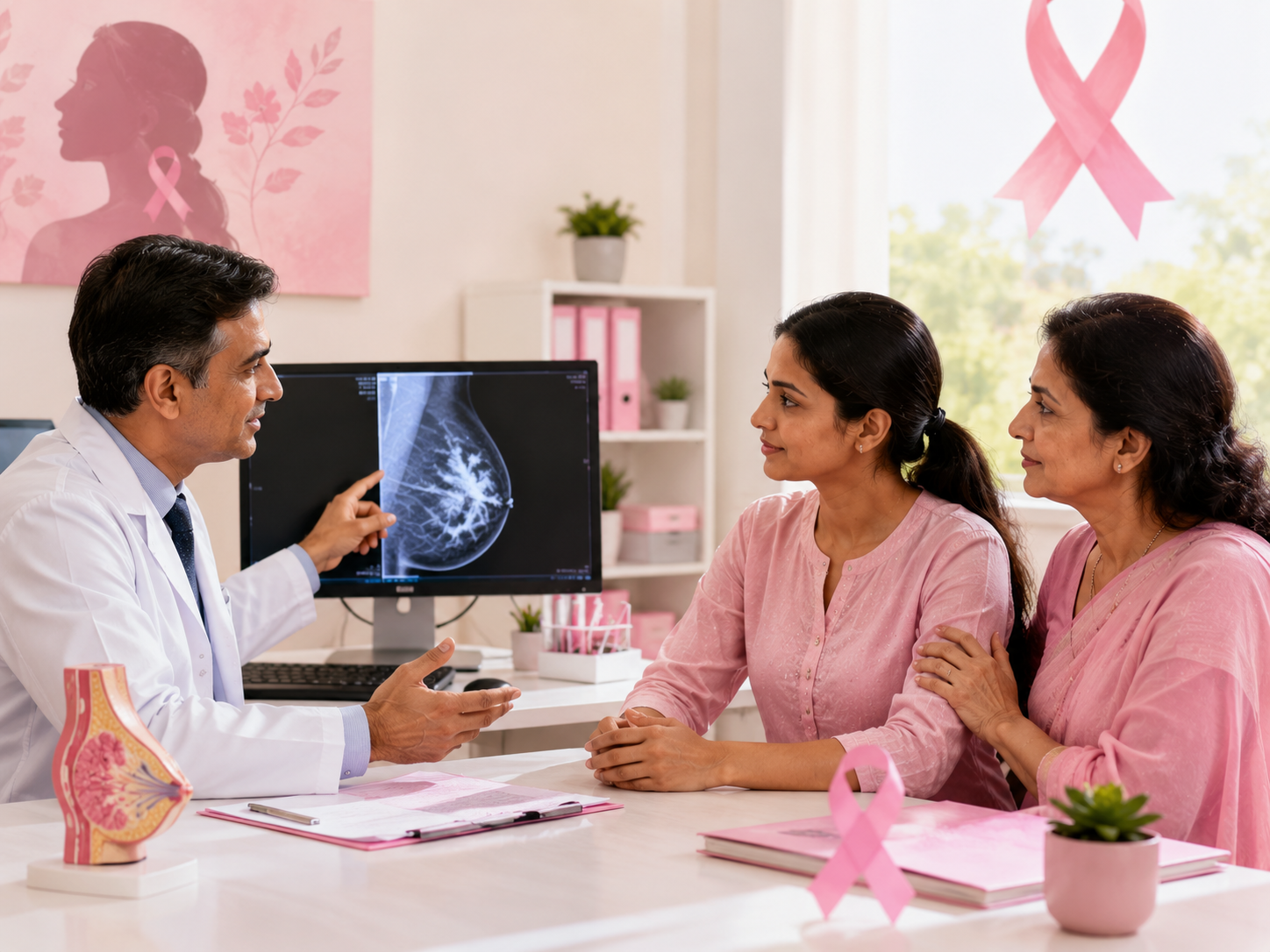
Know Your Risk — Early Action Saves Lives
Genetic counselling and regular screening mammography are key tools for women at elevated risk. Dr. Novak Gupta provides personalised risk assessment and prevention strategies.
Ready to Take the First Step?
Book a consultation with Dr. Novak Gupta today. Expert oncology care is just a call away.