
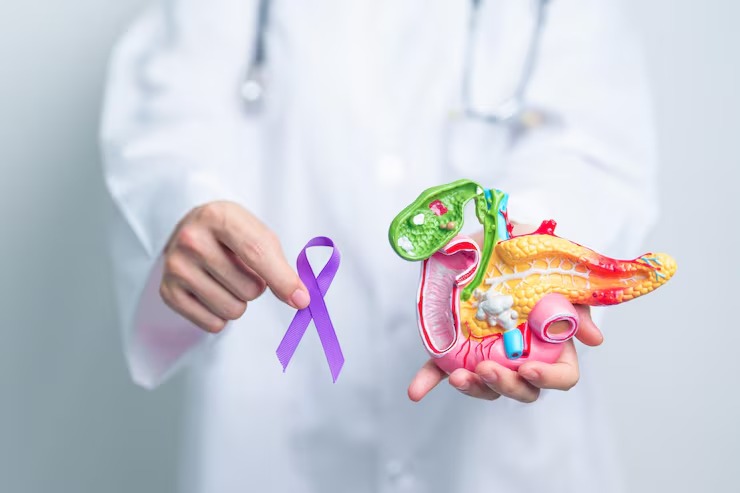
Expert Pancreatic Cancer
Treatment in Faridabad
Comprehensive pancreatic cancer care with FOLFIRINOX, gemcitabine + nab-paclitaxel, BRCA-guided PARP inhibitors, and best-supportive care — by Dr. Novak Gupta, Senior Oncologist.
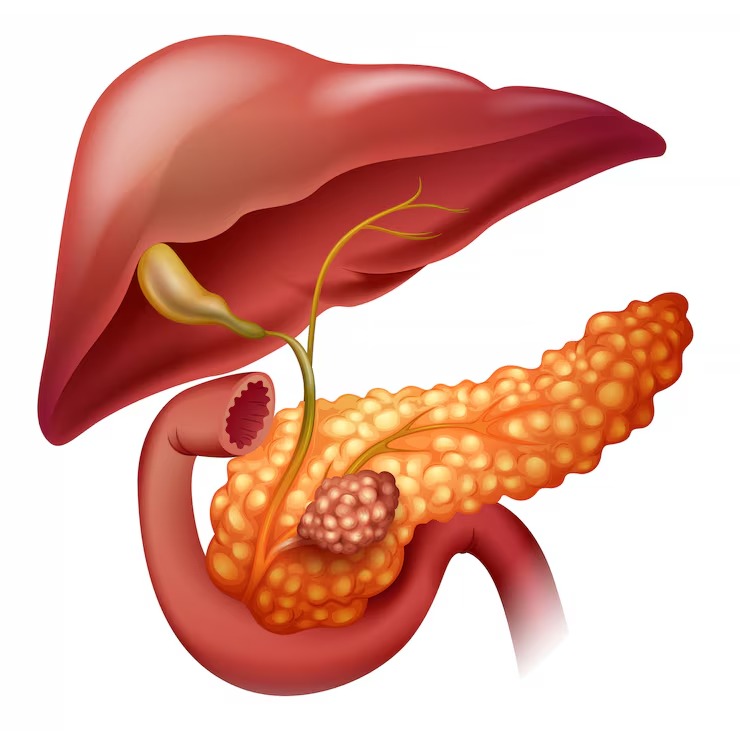
What is Pancreatic Cancer?
Pancreatic cancer — most commonly pancreatic ductal adenocarcinoma (PDAC) — is one of the most challenging malignancies, with a 5-year overall survival rate of ~12%. It is often diagnosed late (80% at unresectable stage) due to its retroperitoneal location and subtle early symptoms. Pancreatic cancer is highly chemoresistant; however, FOLFIRINOX and gemcitabine + nab-paclitaxel regimens have improved survival in fit patients. BRCA1/2 and PALB2-mutated pancreatic cancers respond to platinum-based therapy and PARP inhibitors — making germline testing essential. Supportive care including pain management, nutrition, and biliary drainage are equally important.
Symptoms & Early Signs
Early recognition of symptoms leads to timely diagnosis and significantly better treatment outcomes. Do not ignore these warning signs.
Painless Jaundice
Obstructive jaundice (yellowing of skin and eyes without pain) caused by tumour blocking the bile duct — the classic early sign of head-of-pancreas cancer.
Abdominal / Back Pain
Deep epigastric or back pain radiating through from front to back — characteristic of pancreatic body/tail tumours.
Significant Weight Loss
Rapid, profound weight loss and loss of appetite are almost universal in pancreatic cancer — often the first symptom.
New-Onset Diabetes
New-onset diabetes mellitus in a non-obese older adult should raise suspicion for pancreatic cancer.
Nausea & Vomiting
Nausea, early satiety, and vomiting from gastric outlet obstruction by locally advanced pancreatic tumour.
Pale Stools & Dark Urine
Acholic (pale) stools and dark urine are classic features of obstructive jaundice from bile duct compression.
Causes & Risk Factors
Understanding risk factors helps in early detection and prevention. Consult Dr. Gupta if you are at elevated risk.
Smoking
Tobacco smoking is the most important modifiable risk factor, causing 25% of all pancreatic cancers.
Chronic Pancreatitis
Long-standing pancreatic inflammation (especially alcohol-related or hereditary) significantly elevates risk.
Type 2 Diabetes
Long-standing diabetes is both a risk factor and an early manifestation of underlying pancreatic cancer.
BRCA2 / PALB2 Mutations
Hereditary mutations in BRCA2, PALB2, ATM, and MLH1 substantially increase pancreatic cancer risk.
Family History
Two or more first-degree relatives with pancreatic cancer indicates hereditary risk — surveillance with EUS/MRI recommended.
Obesity & Alcohol
Obesity and chronic heavy alcohol use are independent risk factors for pancreatic malignancy.
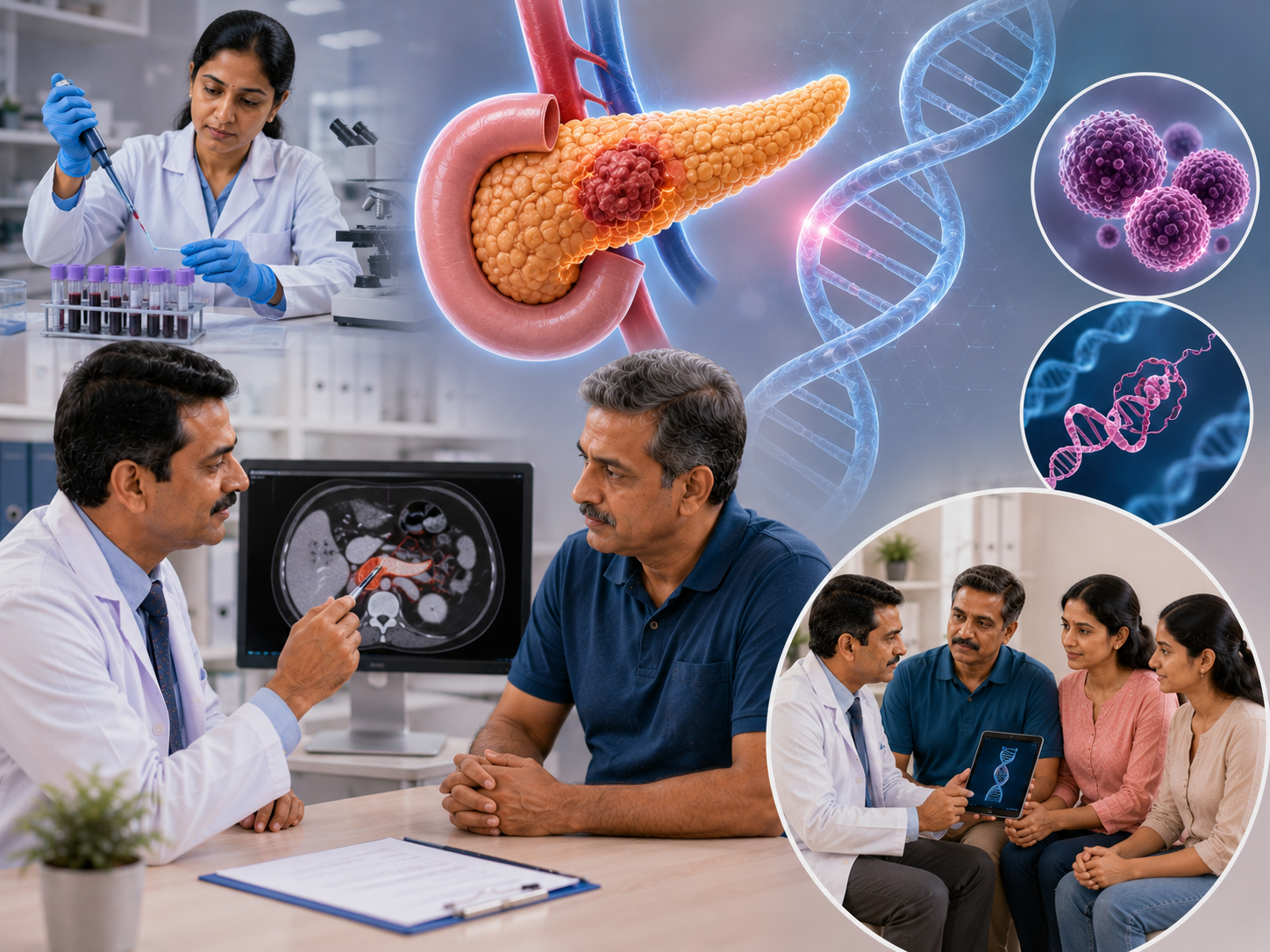
Genetic Testing — Finding Treatable Pancreatic Cancer
BRCA2 and PALB2-mutated pancreatic cancers respond well to platinum-based chemotherapy and PARP inhibitor maintenance. All patients with pancreatic cancer should undergo germline genetic testing regardless of family history.
Ready to Take the First Step?
Book a consultation with Dr. Novak Gupta today. Expert oncology care is just a call away.