
Precision Lung Cancer
Treatment in Faridabad
Advanced non-small cell and small cell lung cancer treatment with EGFR/ALK-targeted therapy, PD-L1 immunotherapy, and platinum-based chemotherapy — led by Dr. Novak Gupta.
What is Lung Cancer?
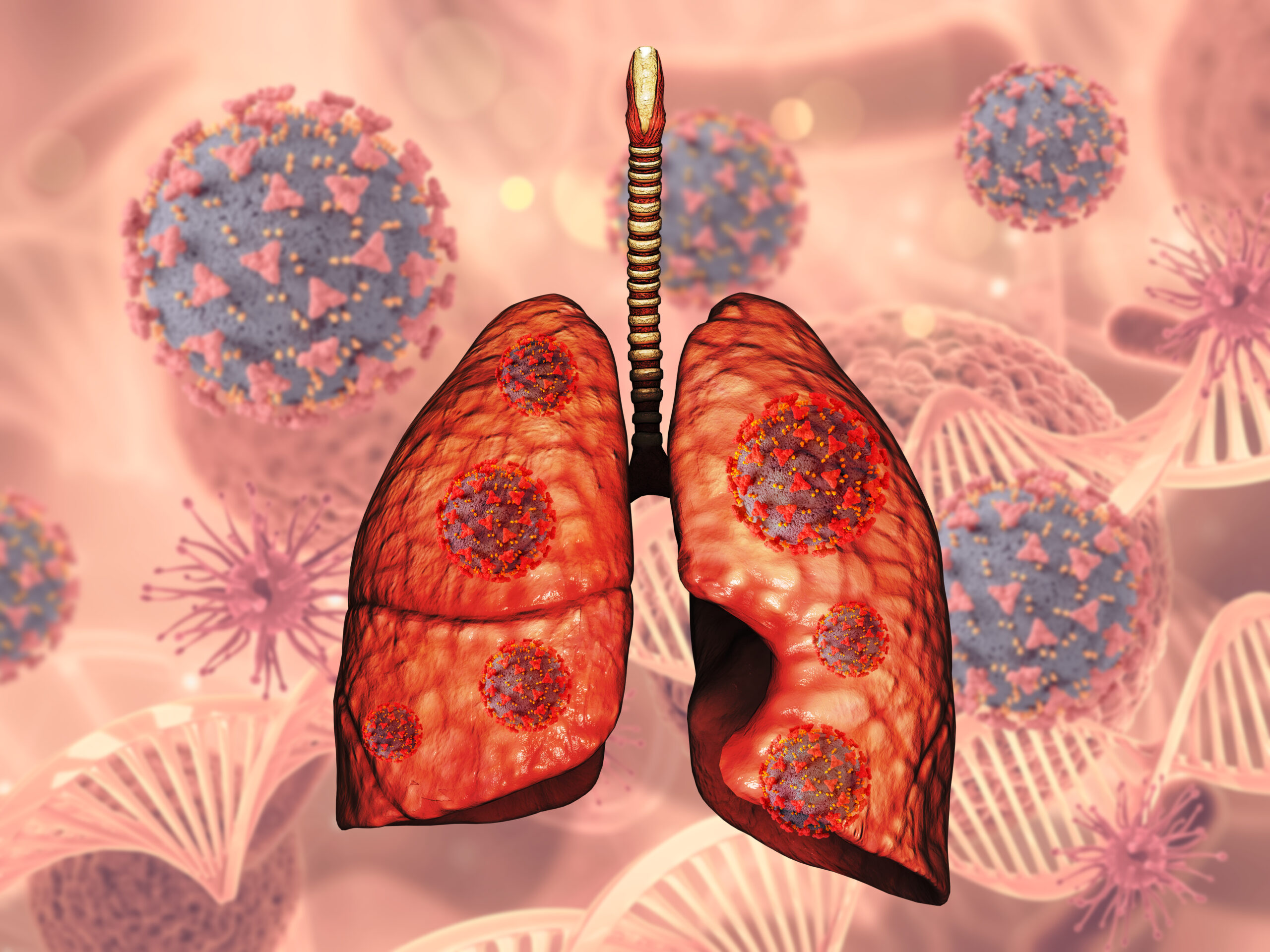
Lung cancer is the leading cause of cancer-related deaths worldwide. It is broadly classified into Non-Small Cell Lung Cancer (NSCLC — ~85%) including adenocarcinoma, squamous cell carcinoma, and large cell carcinoma; and Small Cell Lung Cancer (SCLC — ~15%), which is more aggressive. Molecular testing for EGFR, ALK, ROS1, KRAS, and PD-L1 is now essential to identify targetable mutations and guide precision therapy. Newer immunotherapy combinations have significantly extended survival even in advanced disease.
Symptoms & Early Signs
Early recognition of symptoms leads to timely diagnosis and significantly better treatment outcomes. Do not ignore these warning signs.
Persistent Cough
A new cough or worsening of a chronic cough lasting more than 3 weeks — often the first warning sign.
Haemoptysis
Coughing up blood or blood-streaked sputum, which should always be investigated urgently.
Chest Pain
Persistent dull or sharp chest pain that worsens on breathing, coughing, or laughing.
Breathlessness
Progressive shortness of breath even at rest or with minimal activity, due to tumour obstructing airways.
Hoarse Voice
Unexplained hoarseness lasting more than two weeks due to tumour pressing on the recurrent laryngeal nerve.
Weight Loss & Fatigue
Significant unexplained weight loss and profound tiredness — common systemic features of lung cancer.
Recurrent Pneumonia
Repeated chest infections or pneumonia in the same lung region may indicate an obstructing tumour.
Pleural Effusion
Fluid accumulation around the lung causing breathlessness and reduced exercise tolerance.
Causes & Risk Factors
Understanding risk factors helps in early detection and prevention. Consult Dr. Gupta if you are at elevated risk.
Tobacco Smoking
The single greatest risk factor — smokers have a 15–25× higher risk than non-smokers.
Passive Smoking
Long-term exposure to secondhand smoke increases lung cancer risk by 20–30%.
Air Pollution & Radon
Chronic exposure to outdoor/indoor air pollution and radon gas from soil are significant risk factors.
Occupational Exposure
Asbestos, arsenic, chromium, nickel, and diesel exhaust are established lung carcinogens.
Prior Lung Disease
COPD, pulmonary fibrosis, and prior tuberculosis scars increase lung cancer risk.
Family History & Genetics
First-degree relatives with lung cancer and EGFR germline mutations confer higher personal risk.
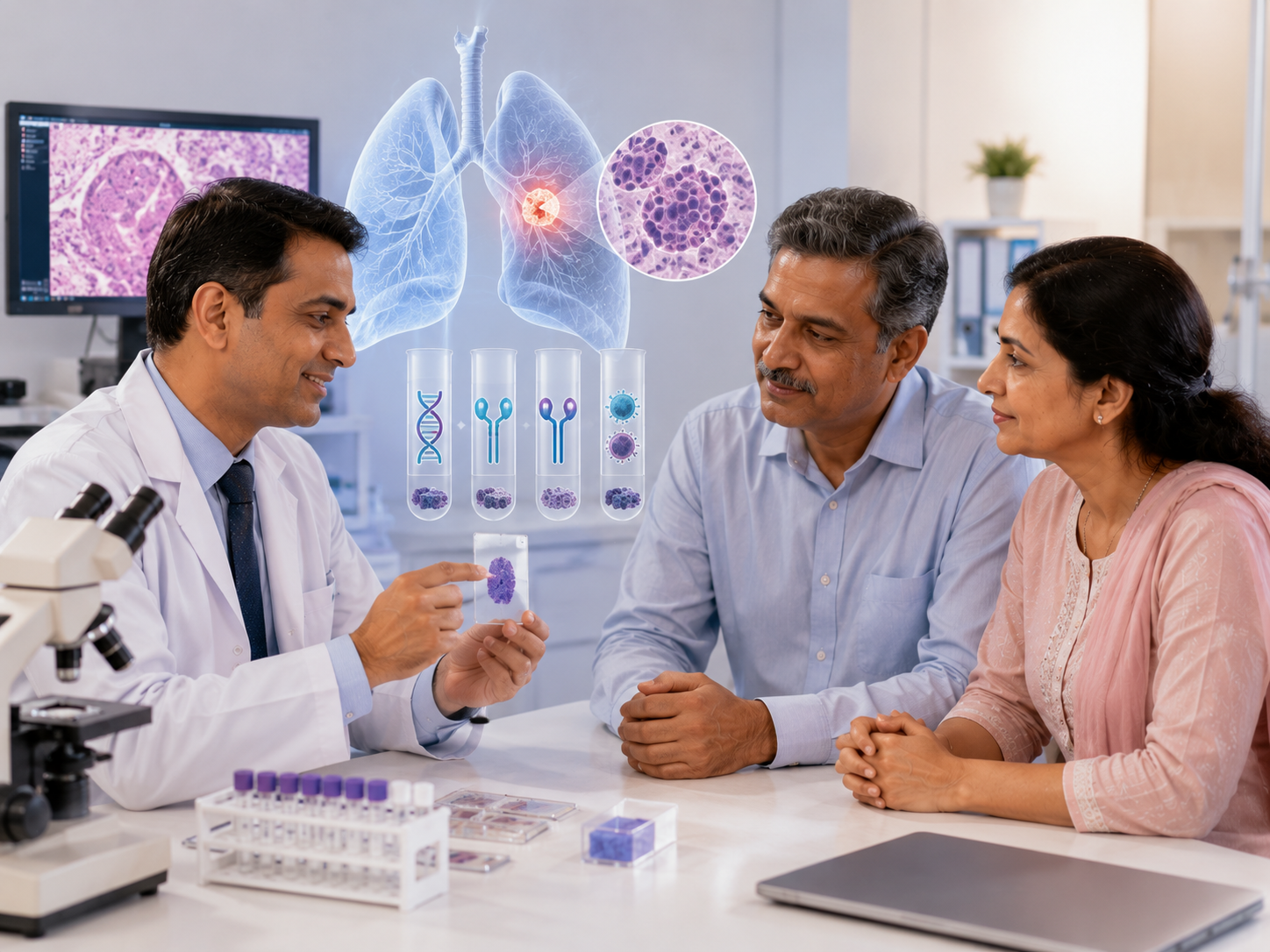
Molecular Testing — The Foundation of Lung Cancer Care
EGFR, ALK, ROS1, and PD-L1 testing on biopsy tissue is now standard practice and determines whether a patient is eligible for targeted therapy or immunotherapy as first-line treatment.
Ready to Take the First Step?
Book a consultation with Dr. Novak Gupta today. Expert oncology care is just a call away.