Stages of Disease: Understanding Progression and Severity

Cancer Types and Locations: Symptoms, Causes and More
September 24, 2026
Cancer Pain Management: When Should You Seek Medical Help?
October 1, 2026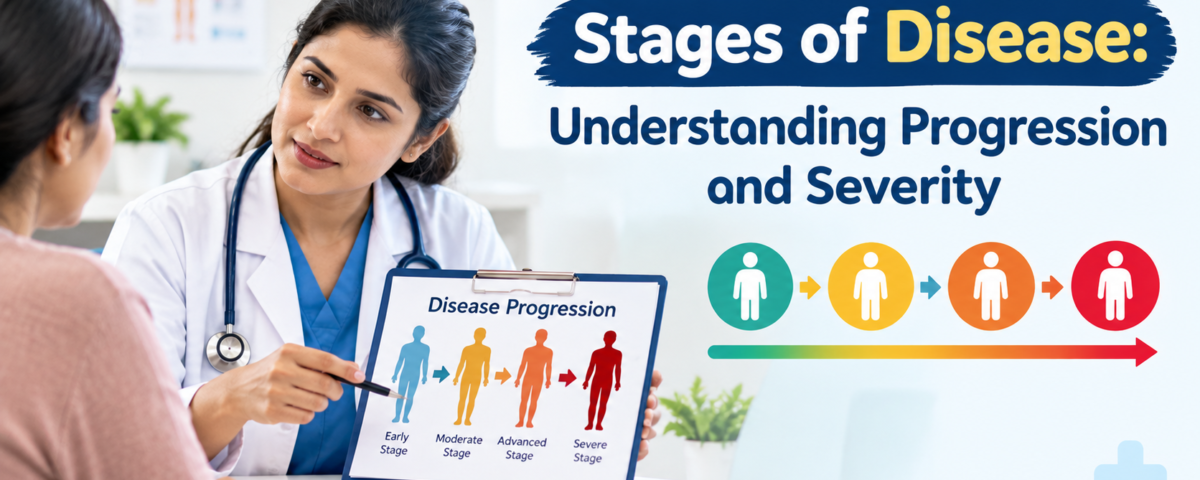
Understanding how an illness develops can help patients and families make informed decisions about diagnosis, treatment, and ongoing care. Dr. Novak Gupta, recognized as a best oncologist in Faridabad, emphasizes the importance of understanding the condition, its progression, and the available treatment approaches. Many diseases develop gradually, while others may progress more quickly. Doctors use medical history, physical examinations, laboratory tests, imaging, and other diagnostic methods to understand how far a condition has developed. Knowing the stages of disease can help healthcare professionals assess the condition and plan appropriate care based on the individual patient’s needs.
The progression of an illness can vary significantly from one person to another. Some conditions may remain stable for a long period, while others can become more advanced without timely diagnosis or treatment. Understanding disease progress and disease severity can help patients recognize why regular medical evaluations are important. Staging or classification systems may differ depending on the specific disease, so patients should discuss their individual diagnosis with a qualified healthcare professional rather than relying only on general information.
What Are the Stages of Disease?
The term stages of disease generally refers to the different phases through which a disease may develop or become more advanced. However, not every disease follows a fixed sequence of stages. Some illnesses are classified according to severity, while others are categorized based on symptoms, affected organs, test results, or the extent of abnormal changes.
For certain conditions, doctors may describe a disease as early, intermediate, or advanced. In other cases, a more detailed staging system may be used. The purpose is to provide a clearer understanding of the condition and support decisions about treatment and monitoring.
Why Staging Matters
Staging can provide useful information about:
- How extensively a disease has developed
- Which organs or tissues may be affected
- Whether the condition has spread to other areas
- What treatment approaches may be considered
- How closely the patient may need to be monitored
How Doctors Determine Disease Progression
Doctors use several sources of information to understand disease progress. The exact evaluation depends on the condition being diagnosed. A physical examination may identify changes in symptoms or bodily functions, while blood tests and other laboratory investigations can provide additional information.
Imaging tests such as ultrasound, CT scans, MRI scans, or X-rays may help doctors observe structural changes. In some conditions, tissue samples or biopsies may also be required. The results are considered together rather than relying on one test alone.
Common Factors Considered
Healthcare professionals may consider:
- Symptoms and their duration
- Physical examination findings
- Laboratory test results
- Imaging findings
- Tissue or biopsy results when necessary
- Response to previous treatment
- Involvement of other organs or tissues
These factors help doctors understand the current condition and determine whether additional evaluation or treatment is needed.
Factors That Can Influence Disease Severity
Disease severity describes how significantly an illness is affecting a person’s health. Severity can depend on several factors, including the type of disease, the organs involved, the extent of abnormalities, and the presence of complications.
For example, two people with the same diagnosis may experience different symptoms or require different treatment plans. Age, general health, other medical conditions, and response to treatment can also influence how an illness is managed.
It is important to remember that severity and stage are not always the same thing. A doctor may use different measurements or classification systems depending on the disease.
Understanding Early, Intermediate, and Advanced Conditions
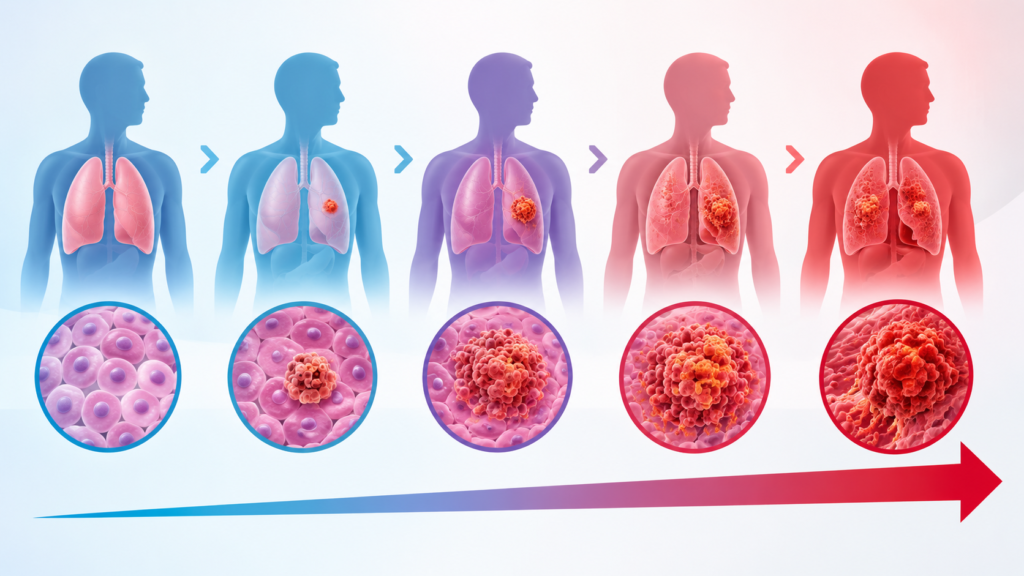
Although specific classifications vary, general descriptions such as early, intermediate, and advanced disease are commonly used to explain how extensively a condition has developed.
Early Stage
An early condition may involve limited changes or affect a smaller area. Symptoms may be mild, absent, or difficult to recognize. Early detection can provide an opportunity for timely evaluation and management.
Intermediate Stage
At an intermediate stage, symptoms or abnormal findings may become more noticeable. The condition may require closer monitoring, more extensive treatment, or additional diagnostic tests.
Advanced Stage
An advanced condition may involve greater tissue or organ involvement, complications, or spread to other areas, depending on the disease. Treatment may focus on controlling the condition, reducing symptoms, preventing complications, or improving quality of life.
Because every illness behaves differently, these descriptions should not be applied to a specific diagnosis without professional medical evaluation.
Why Early Diagnosis Is Important
Recognizing symptoms and seeking medical advice early can help identify health problems before they become more difficult to manage. Regular checkups may also be useful for people who have risk factors or a family history of certain conditions.
Early diagnosis does not guarantee a particular outcome, but it allows healthcare professionals to evaluate the condition and discuss suitable management options. Patients should report persistent, unusual, or worsening symptoms rather than delaying medical consultation.
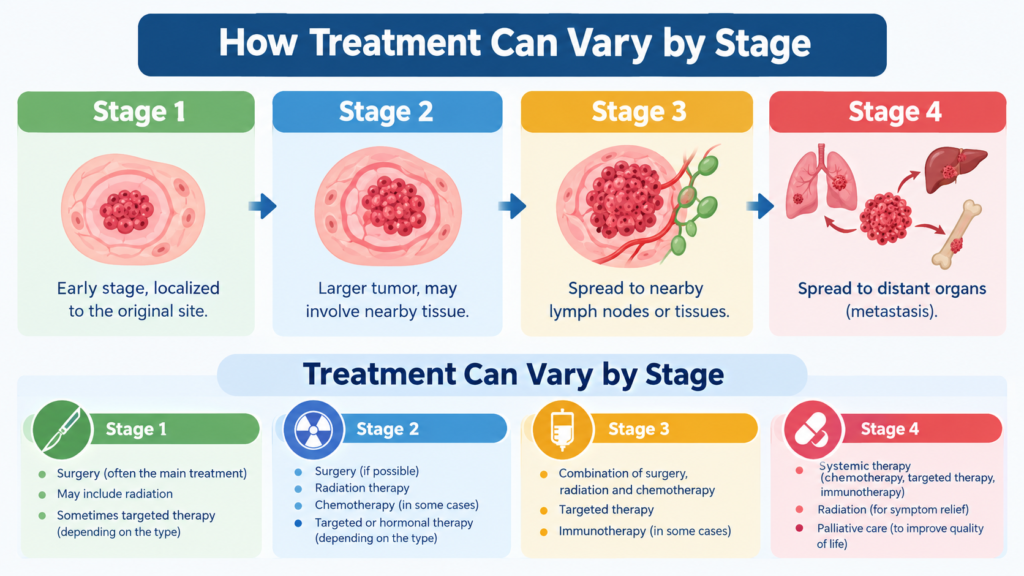
How Treatment Can Vary by Stage
Treatment decisions are influenced by the type of disease, its extent, symptoms, overall health, and individual circumstances. Depending on the diagnosis, management may involve medication, surgery, radiation therapy, chemotherapy, targeted treatment, immunotherapy, lifestyle changes, monitoring, or a combination of approaches.
Doctors may also modify treatment when the condition changes or when a patient responds differently than expected. Understanding the stages of disease can therefore help patients understand why their healthcare team may recommend different approaches at different points.
The Importance of Follow-Up Care
Follow-up appointments allow doctors to evaluate whether the condition is stable, improving, or progressing. Depending on the disease, follow-up may include physical examinations, blood tests, imaging, or other investigations.
Keeping medical records, following prescribed treatment, and attending recommended appointments can make ongoing care more organized and effective.
When Should You Consult a Doctor?
Patients should consider medical evaluation when symptoms are persistent, unexplained, recurring, or worsening. Warning signs can differ considerably depending on the condition, so there is no single list of symptoms that applies to every disease.
People who have already received a diagnosis should follow their healthcare professional’s recommendations for monitoring and treatment. Any new or worsening symptoms should be discussed with the treating team.
Conclusion
Understanding the stages of disease can make medical information easier to understand and help patients communicate more effectively with their healthcare providers. Disease classification provides doctors with useful information about the extent and characteristics of a condition, but staging systems differ between diseases. Diagnosis, treatment decisions, and follow-up should always be based on an individual’s medical evaluation and professional guidance. Dr. Novak Gupta can help patients understand their diagnosis, available evaluation options, and appropriate treatment considerations based on their individual condition.